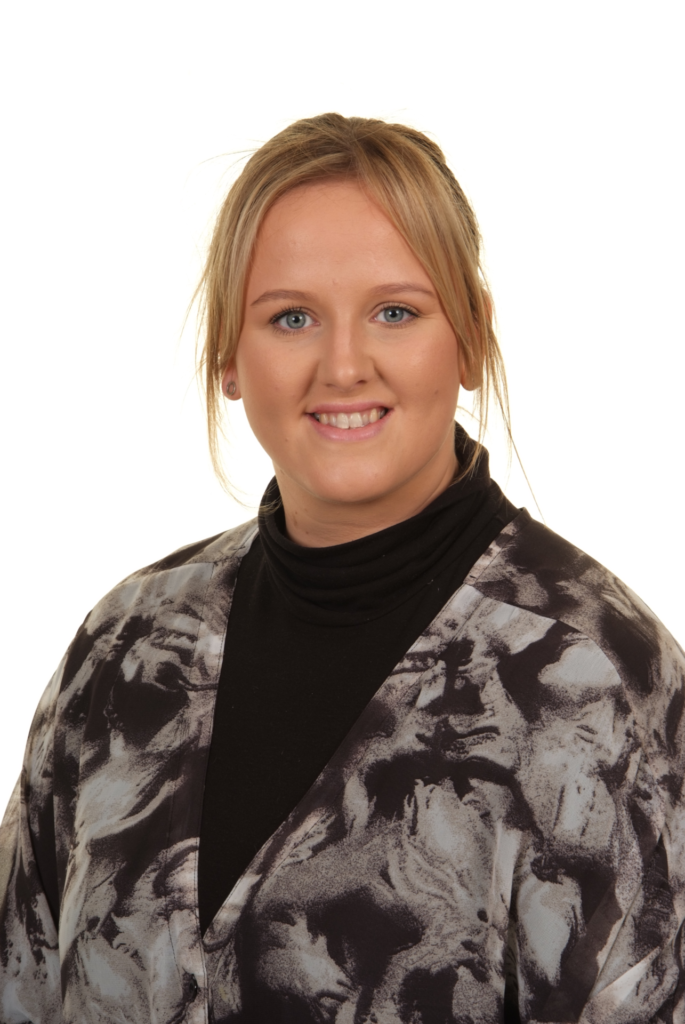
Miss F Weldon (English Lead)
At Eslington Primary School, our vision is for all children to leave school confident and able to communicate for a variety of purposes through written and spoken language; with the English skills to achieve their future dreams in life. We believe that English is central to children’s intellectual, emotional and social development, it has an essential role across the curriculum and helps pupils’ learning to be coherent and progressive. Our curriculum provides children with the opportunity to immerse themselves in high-quality texts that give a balanced diet of fiction and non-fiction. We think it is crucial that children can also identify their own life experiences in stories too. We want to enable children to be enthusiastic writers and who see a real purpose for the writing that they produce. Our aim is that children see the value in their work, producing writing they feel proud of.
Writing
At Eslington Primary School, we believe to write is fundamental to our children succeeding; enabling them to access the next stage of their education and beyond. Our carefully crafted English curriculum is designed with the intent to equip children with the necessary skills, knowledge and attributes to allow them to develop a lively and enquiring mind. Here at Eslington Primary School, we recognise the importance of spoken language and how this underpins the development of reading and writing. We ensure that pupils are able to express themselves creatively and to communicate effectively with others whilst following the ’Talk for Writing’ structure and linking learning to our Four R’S: Resilience, Relationships, Respect, Responsibility.
The programmes of study for writing at Key stages 1 and 2 are constructed similarly to those for reading:
- transcription (spelling and handwriting)
- composition (articulating ideas and structuring them in speech and writing).
It is essential that teaching develops pupils’ competence in these two dimensions. In addition, pupils should be taught how to plan, revise and evaluate their writing. These aspects of writing have been incorporated into the programmes of study for composition.
Writing down ideas fluently depends on effective transcription: that is, on spelling quickly and accurately through knowing the relationship between sounds and letters (phonics) and understanding the morphology (word structure) and orthography (spelling structure) of words. Effective composition involves forming, articulating and communicating ideas, and then organising them coherently for a reader. This requires clarity, awareness of the audience, purpose and context, and an increasingly wide knowledge of vocabulary and grammar. Writing also depends on fluent, legible and, eventually, speedy handwriting.
The overarching aim for English in the National Curriculum is to promote high standards of language and literacy by equipping pupils with a strong command of the spoken and written word, and to develop their love of literature through widespread reading for enjoyment. The national curriculum for English aims to ensure that all pupils:
- read easily, fluently and with good understanding
- develop the habit of reading widely and often, for both pleasure and information
- acquire a wide vocabulary, an understanding of grammar and knowledge of linguistic conventions for reading, writing and spoken language
- appreciate our rich and varied literary heritage
- write clearly, accurately and coherently, adapting their language and style in and for a range of contexts, purposes and audiences
- use discussion in order to learn; they should be able to elaborate and explain clearly their understanding and ideas
- are competent in the arts of speaking and listening, making formal presentations, demonstrating to others and participating in debate.
Reading
As a child grows up, being able to read well not only enables them to discover new facts and to learn at school, but also opens them up to a world of new ideas, stories and opportunities. All of the decisions we make as a school on reading are based on research – we are well informed and up to the minute. Our staff are committed to ensuring that all children become independent and fluent readers during their time at our school. We want our children to enjoy books as much as we do! With this in mind, we aim to inspire a true love of reading, whereby our children are enthusiastic, fluent and motivated readers who feel confident about talking about books and authors. To further inspire children, reading is celebrated through World Book Day, Poetry Day and other National campaigns. At Eslington Primary School, we follow ‘Read Write Inc.’ phonics and children develop fluency through additional use of ‘Oxford Reading Tree’. This allows our children to develop a wealth of vocabulary from a range of high-quality texts.
We ensure that the study of reading from Early Years, Key Stage 1 to Key Stage 2 consist of two dimensions:
- word reading
- Comprehension (both listening and reading)
We believe it is essential that teaching focuses on developing pupils’ competence in both dimensions; different kinds of teaching are needed for each. Through reading in particular, pupils have a chance to develop culturally, emotionally, intellectually, socially and spiritually
The overarching aim for English in the National Curriculum is to promote high standards of language and literacy by equipping pupils with a strong command of the spoken and written word, and to develop their love of literature through widespread reading for enjoyment. The national curriculum for English aims to ensure that all pupils:
- read easily, fluently and with good understanding
- develop the habit of reading widely and often, for both pleasure and information
- acquire a wide vocabulary, an understanding of grammar and knowledge of linguistic conventions for reading, writing and spoken language
- appreciate our rich and varied literary heritage
- write clearly, accurately and coherently, adapting their language and style in and for a range of contexts, purposes and audiences
- use discussion in order to learn; they should be able to elaborate and explain clearly their understanding and ideas
- are competent in the arts of speaking and listening, making formal presentations, demonstrating to others and participating in debate.